Published at Solar Energy – Effects of aperture configurations on heat losses in concentrated solar power systems: An experimental study for a semi-cylindrical cavity receiver
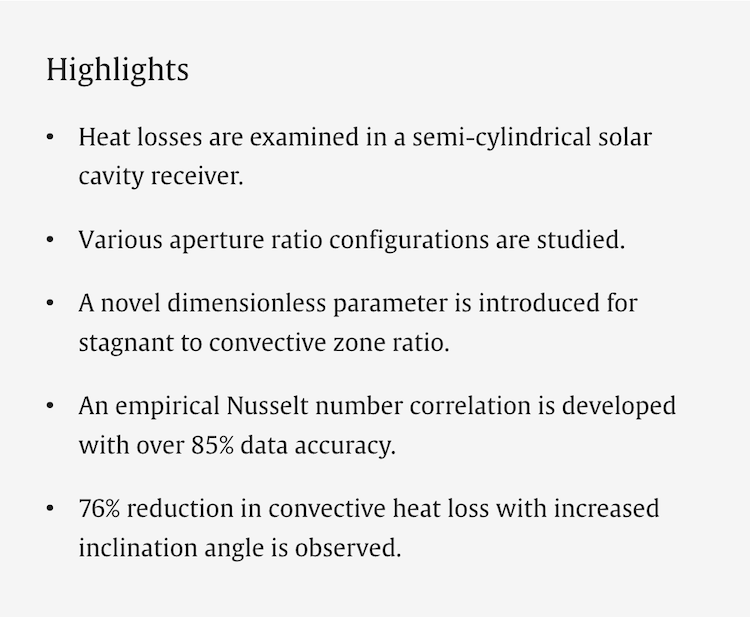
Abstract: This study presents a comprehensive experimental investigation into the convective heat losses of a semi-cylindrical cavity receiver, a geometry that holds considerable promise but has been inadequately explored in the context of parabolic trough concentrated solar power systems. The research systematically examines the impact of key operational and geometric parameters, including inclination angle, input …

Published at Renewable and Sustainable Energy Reviews – A systems engineering review on the integration of solar concentrators with photoelectrochemical processes

Abstract: Photoelectrochemical (PEC) processes offer several pathways to decarbonisation, but few studies have demonstrated technology readiness levels (TRLs) beyond 4 and 5. Scaling challenges and the high levelised cost of energy of current PEC processes can be addressed by integrating concentrating solar optics. However, PEC research is primarily focused on materials development and reactor engineering, …

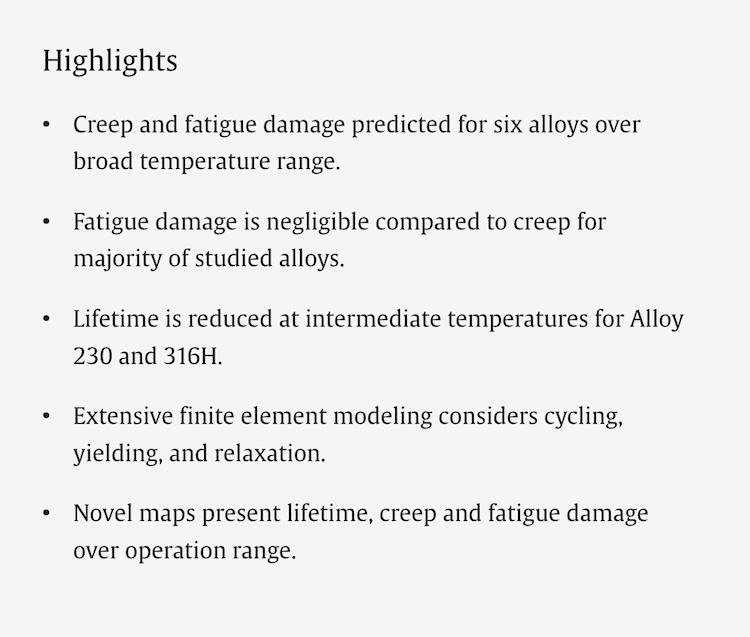
Published at Solar Energy – Damage modeling of power tower receiver tubes using the SRLIFE tool

Abstract: Concentrating Solar Power (CSP) molten-salt central receivers are subject to high, transient incident flux during daily operation. The resulting creep-fatigue damage impacts the receiver’s reliability and restricts the permissible incident flux distribution for a given receiver. This paper aims to reduce CSP plants’ levelized cost of electricity by developing a methodology to predict lifetime …

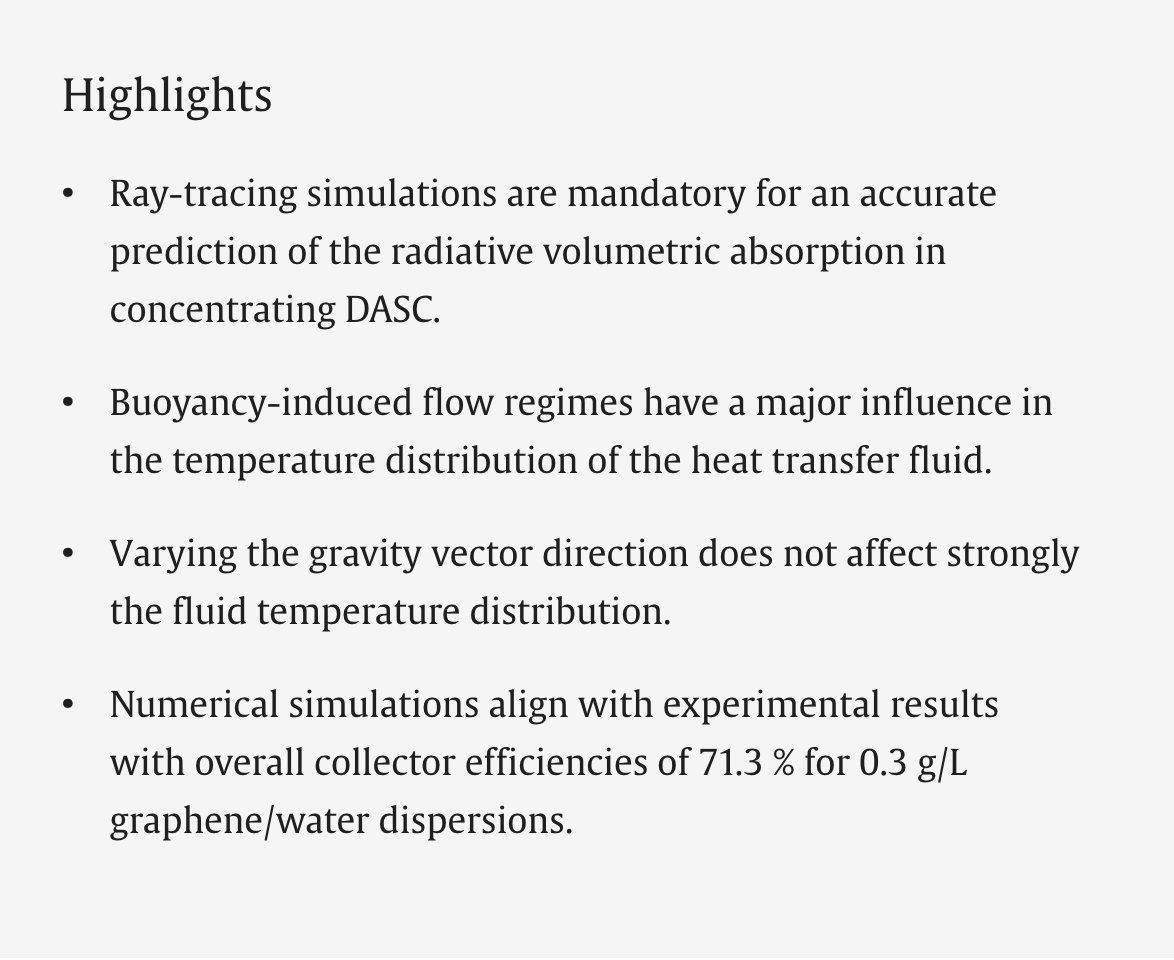
Published at Applied Thermal Engineering – Modelling of flow regimes in tubular concentrating direct absorption solar collectors

Abstract: Direct absorption solar collectors have gained attention in the last decades as a promising solution to enhance the performance of conventional thermal collectors. In this concept, the heat transfer fluid absorbs the concentrated radiation volumetrically, which optical properties can be enhanced by dispersing nanoparticles. While several works have reported the benefits of volumetrically absorbing …

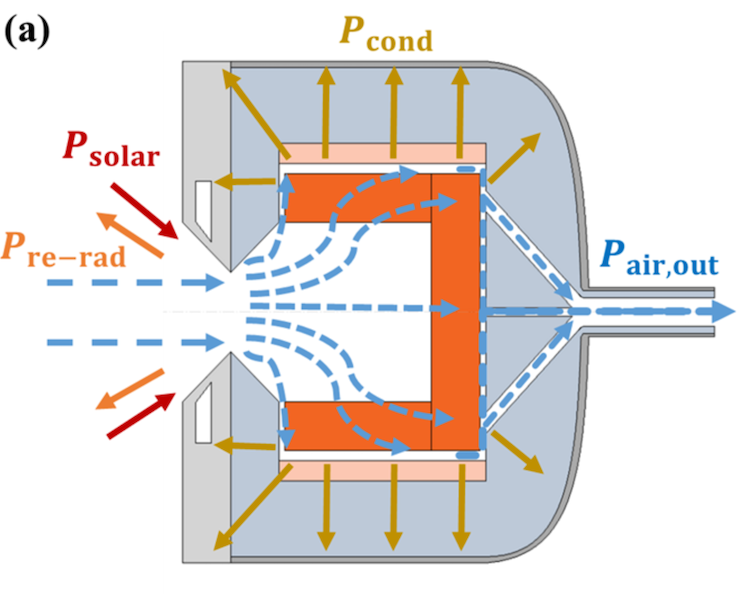
Published at Solar Energy Engineering – A Solar Air Receiver With Porous Ceramic Structures for Process Heat at Above 1000 °C—Heat Transfer Analysis

Abstract: Concentrated solar energy can be used as the source of heat at above 1000 °C for driving key energy-intensive industrial processes, such as cement manufacturing and metallurgical extraction, contributing to their decarbonization. The cornerstone technology is the solar receiver mounted on top of the solar tower, which absorbs the incident high-flux radiation and heats …

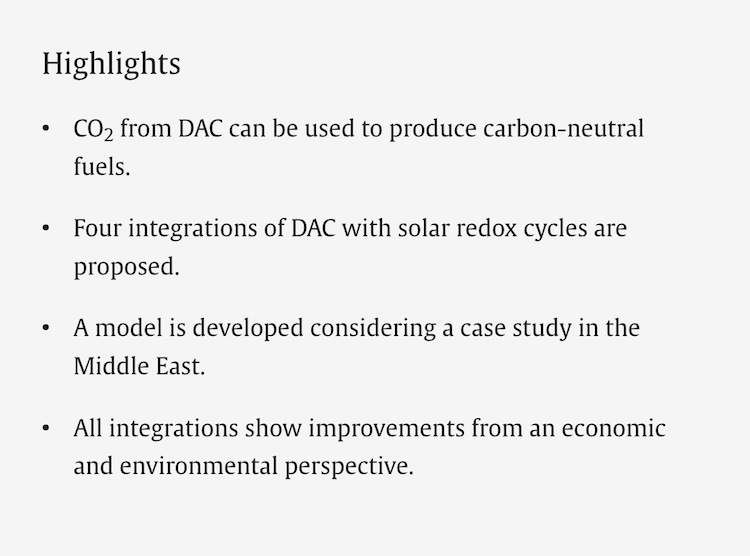
International Journal of Hydrogen Energy – A techno-economic and environmental evaluation of the integration of direct air capture with hydrogen derivatives production

Abstract: Carbon-neutral fuels are key to decarbonizing hard-to-abate sectors. Solar redox cycles can produce them by creating oxygen vacancies in a metal oxide capable of splitting water and CO2. The resulting synthesis gas can be processed into a liquid fuel like methanol. To close the carbon cycle, feedstock CO2 can be captured from the atmosphere …

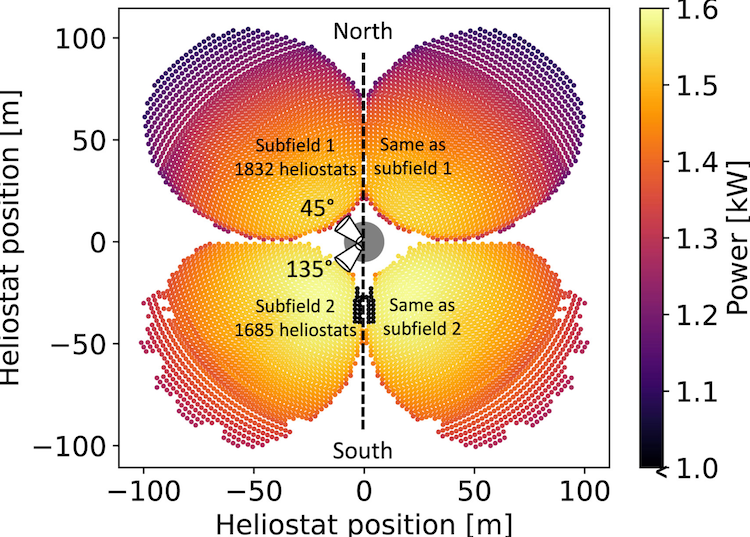
Published at Solar Energy – Solar concentrator layout and performance analysis for multi-aperture receiver-reactors in high-temperature applications

Abstract: Promising new receiver-reactor concepts with multiple apertures have been proposed for high temperature solar thermochemical hydrogen production. However, limited information about suitable solar concentrator designs consisting of heliostat fields and secondary concentrators is available so far. The goal of this study is a detailed investigation of the effect of selected solar concentrator design parameters …

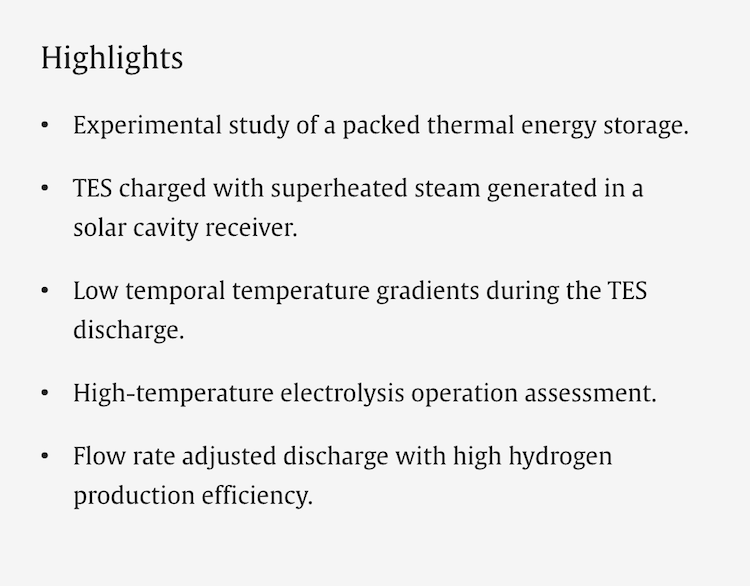
Published at Solar Energy – Effects of concentrated solar–integrated packed-bed thermal energy storage operation on solid oxide electrolysis cell performance

Abstract: The use of renewable energy in the context of green hydrogen production requires suitable energy storage technologies to compensate for intermittent wind and solar resources. High-temperature electrolysis is a promising way to produce hydrogen as it has the highest electrical efficiency by using steam instead of liquid water compared to low temperature electrolysis. Here, …

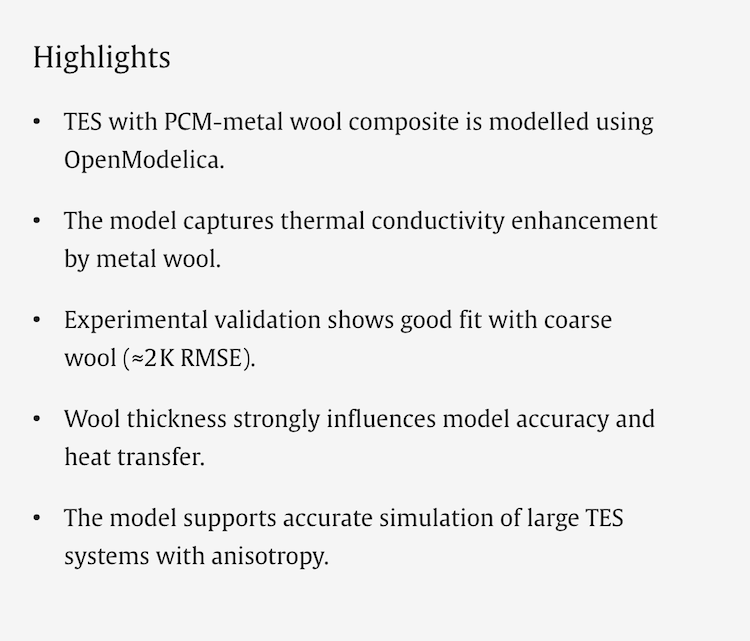
Published at Applied Thermal Engineering – Dynamic heat transfer model for thermal energy storage using metal wool–phase change material composites

Abstract: Decarbonisation of the energy sector is critical for climate change mitigation, with the power sector remaining a major contributor to global emissions. Concentrating solar power (CSP) technology combined with thermal energy storage (TES) presents a promising solution to overcome this challenge. TES systems, particularly those utilising phase change materials (PCMs), offer efficient energy storage …

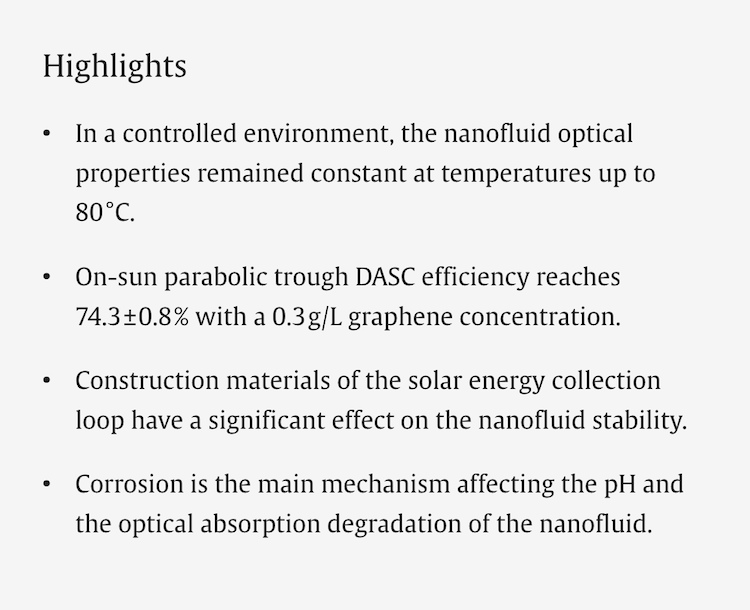
Published at Sustainable Energy Technologies and Assesments – On-sun performance and stability of graphene nanofluids in concentrating direct absorption solar collectors

Abstract: The Performances of direct absorption solar collectors (DASC) are limited by the stability of the nanofluid’s optical properties. This study investigates the performance and long-term stability of a graphene-based nanofluid under real on-sun operating conditions using an experimental parabolic trough pilot. The on-sun experiments were complemented with a detailed off-sun experimental evaluation of the …