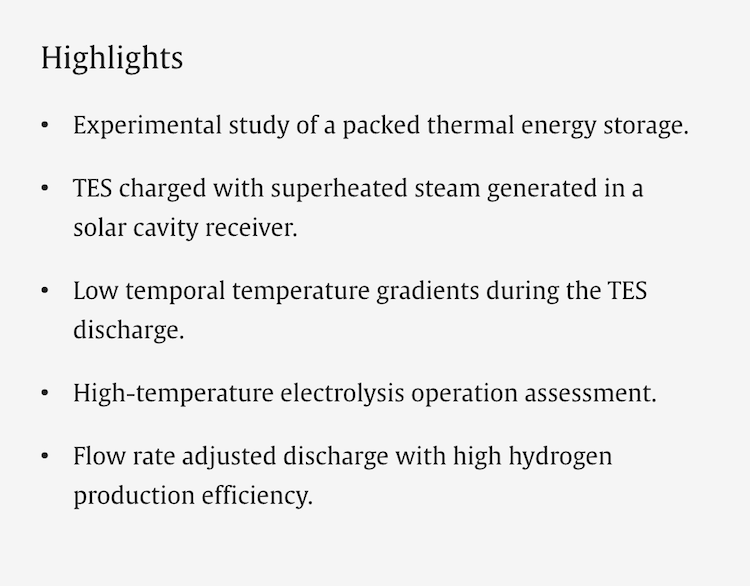
Abstract: The use of renewable energy in the context of green hydrogen production requires suitable energy storage technologies to compensate for intermittent wind and solar resources. High-temperature electrolysis is a promising way to produce hydrogen as it has the highest electrical efficiency by using steam instead of liquid water compared to low temperature electrolysis. Here, …
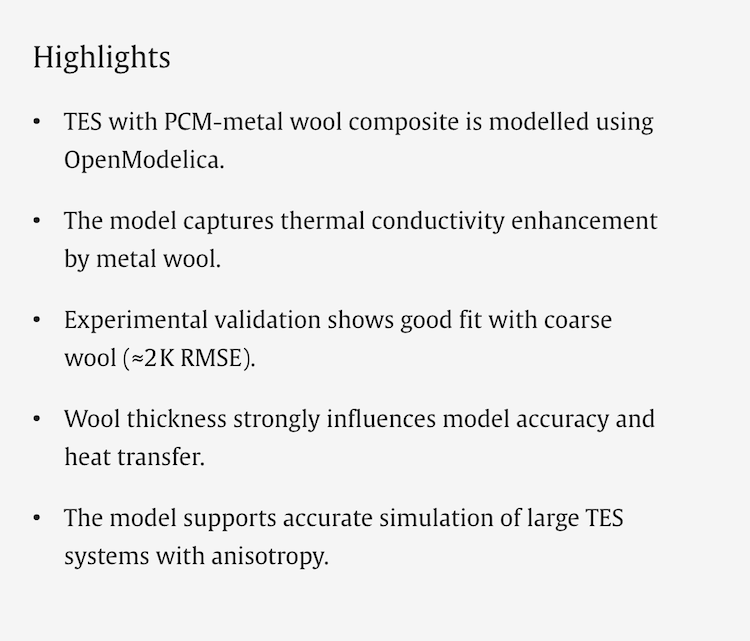
Published at Applied Thermal Engineering – Dynamic heat transfer model for thermal energy storage using metal wool–phase change material composites
Abstract: Decarbonisation of the energy sector is critical for climate change mitigation, with the power sector remaining a major contributor to global emissions. Concentrating solar power (CSP) technology combined with thermal energy storage (TES) presents a promising solution to overcome this challenge. TES systems, particularly those utilising phase change materials (PCMs), offer efficient energy storage …
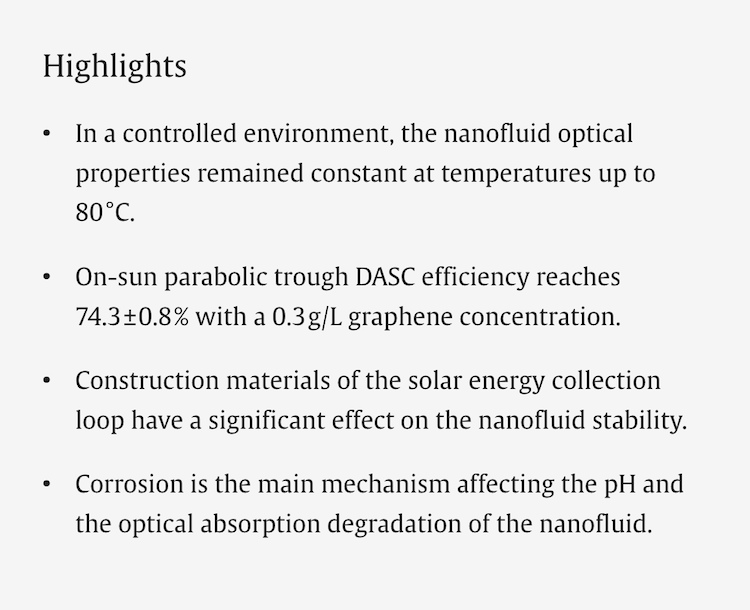
Published at Sustainable Energy Technologies and Assesments – On-sun performance and stability of graphene nanofluids in concentrating direct absorption solar collectors
Abstract: The Performances of direct absorption solar collectors (DASC) are limited by the stability of the nanofluid’s optical properties. This study investigates the performance and long-term stability of a graphene-based nanofluid under real on-sun operating conditions using an experimental parabolic trough pilot. The on-sun experiments were complemented with a detailed off-sun experimental evaluation of the …
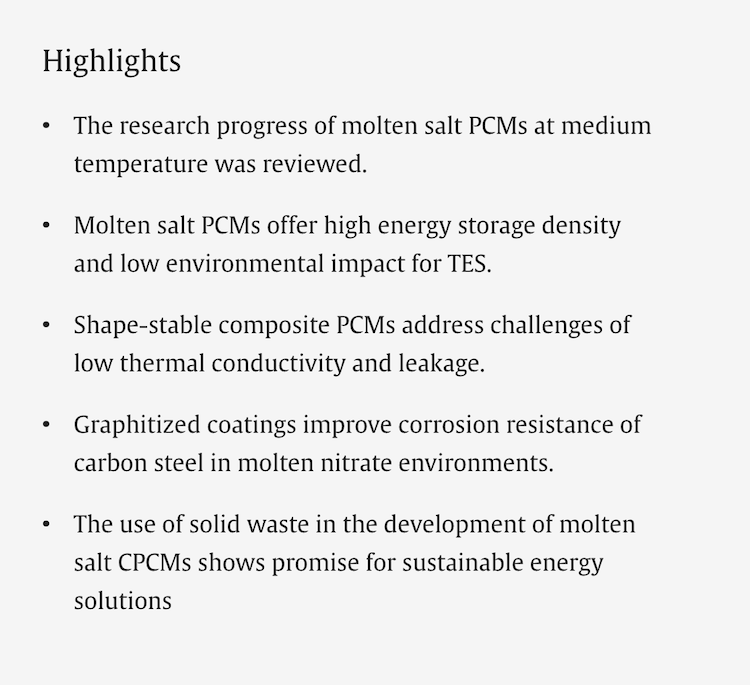
Published at Applied Energy – A review of the performance and application of molten salt-based phase change materials in sustainable thermal energy storage at medium and high temperatures
Abstract: Growing energy demand and environmental pollution issues are placing greater demands on sustainable thermal energy storage. Research indicates that molten salt phase change materials (MSPCMs) represent a promising alternative for thermal energy storage (TES), effectively addressing the energy supply-demand imbalance. These salts typically have a range of excellent properties, such as high energy storage …
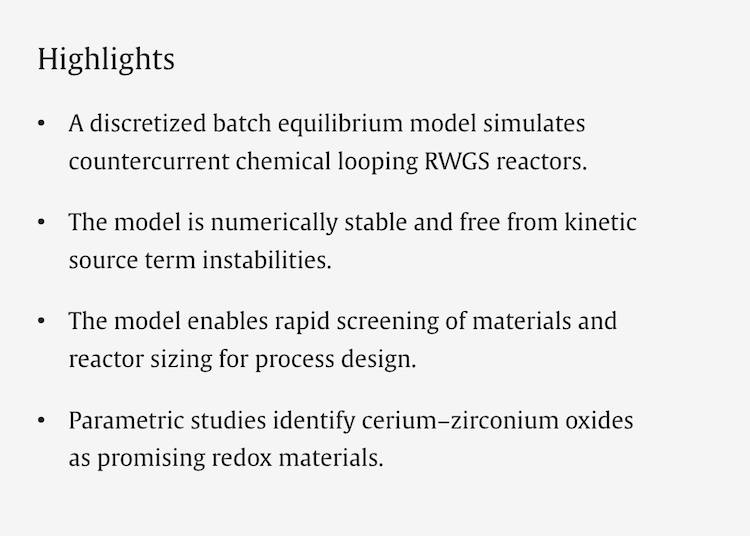
Published at Chemical Engineering Journal – Thermodynamic modeling of countercurrent chemical looping reverse water gas shift process for redox material screening
Abstract: The reverse water gas shift (RWGS) reaction is a key pathway for CO2 utilization, particularly within Power-to-X process chains aimed at sustainable fuel and chemical production. Countercurrent chemical looping (CL-RWGS) using non-stoichiometric oxides can overcome equilibrium limitations of conventional RWGS reactors, enabling significantly higher CO2 conversions. However, modeling the limiting performance of such systems …
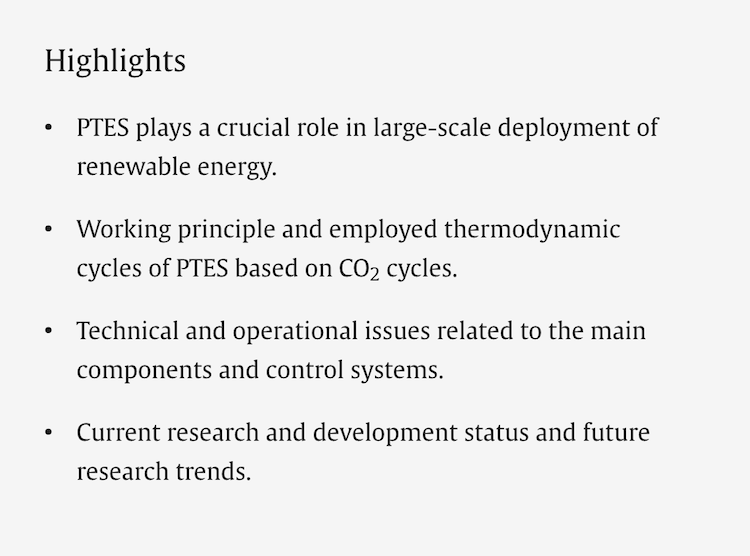
Published at Applied Thermal Engineering – A technology review of pumped thermal energy storage based on CO2 cycles
Abstract: Pumped thermal energy storage (PTES) is an innovative physical energy storage technology that converts surplus electricity into heat, stores it in thermal reservoirs, and reconverts it into electricity when needed. When CO2 is employed as the working fluid, PTES can offer advantages of potentially high round-trip efficiency, compact system equipment, and good operational flexibility …
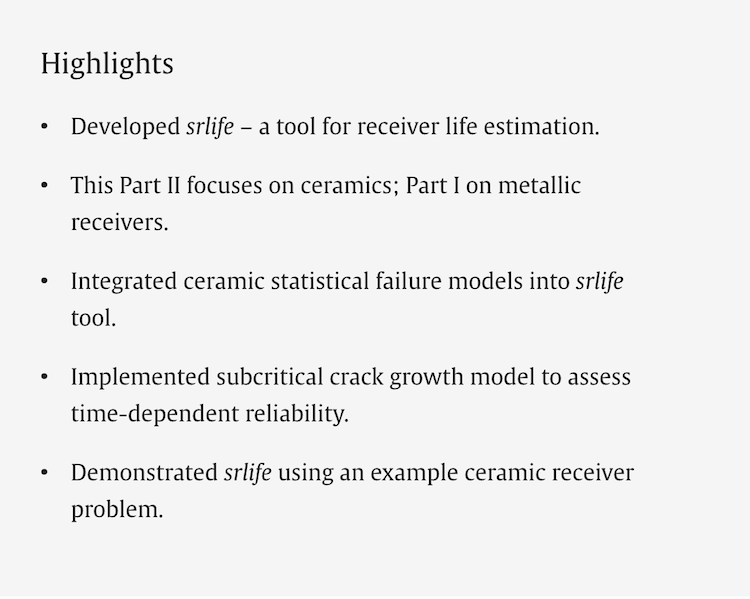
Published at Solar Energy – srlife: A software tool for estimating the life of high temperature concentrating solar receivers. Part II – Ceramic receivers
Abstract: As Concentrating Solar Power (CSP) technologies aim for higher operating temperatures to enhance efficiency and meet industrial process heat demands, high-temperature metallic materials, including nickel-based superalloys, face challenges in maintaining structural integrity. Advanced ceramics offer a promising alternative due to their superior high-temperature strength. However, accurately assessing the performance of ceramic components requires a …
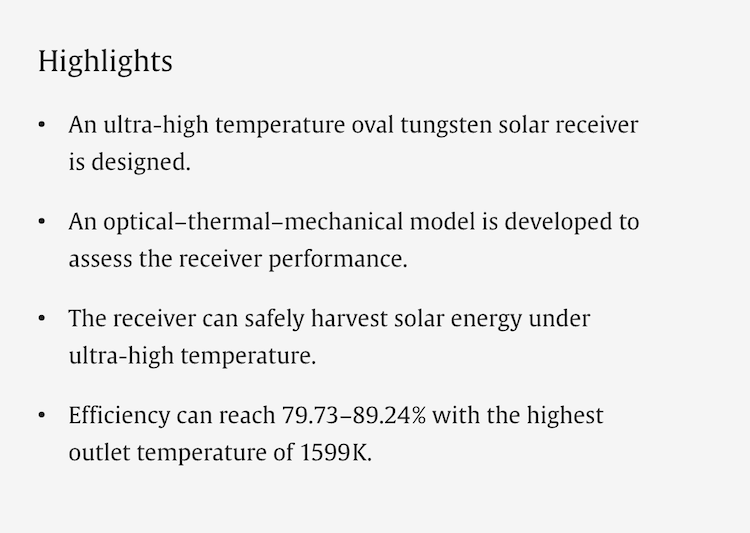
Published at Applied Thermal Engineering – Performance evaluation of an oval solar receiver for safe and efficient ultra-high temperature operation
Abstract: Improving the operating temperature of the solar receiver can enhance power cycle efficiency in solar power towers by raising the turbine-inlet temperature. However, maintaining high efficiency and safety at ultra-high temperatures (>1573 K) remains challenging. Therefore, this work focuses on the design and optimization of an oval tungsten solar receiver. Firstly, the receiver performance under …
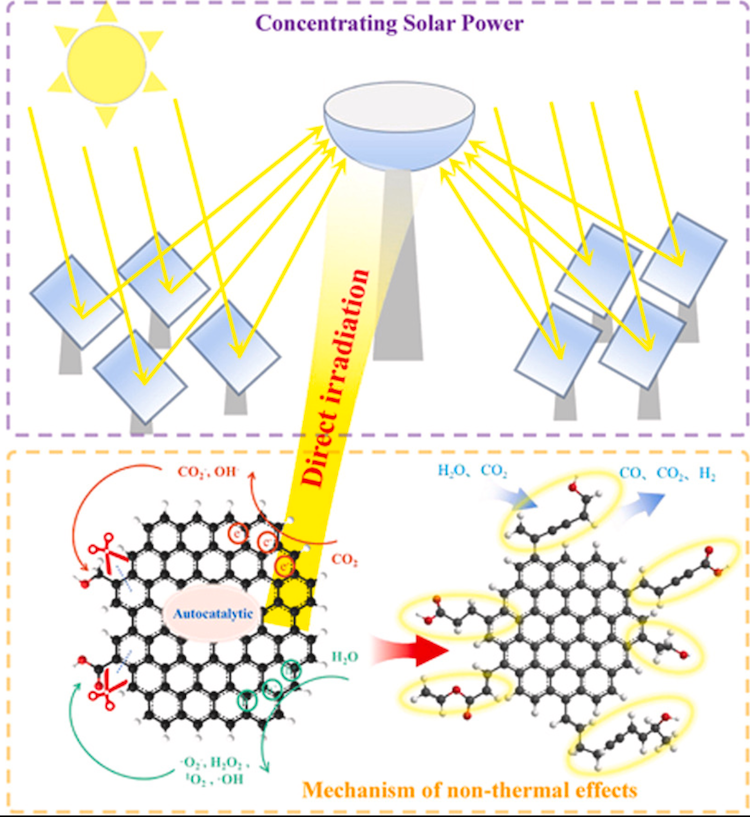
Published at Renewable Energy – Study of enhanced gasification of biochar by non-thermal concentrating solar power using novel high-flux solar simulator thermogravimetric analyzer system
Abstract: Currently the thermal effect of light has received extensive attention in the field of concentrating solar power gasification, but the non-thermal effect of light has been neglected. In this study, a high-flux solar simulator was coupled with a thermogravimetric analyzer and the thermal effects of concentrating solar power were effectively controlled. The non-thermal effect …
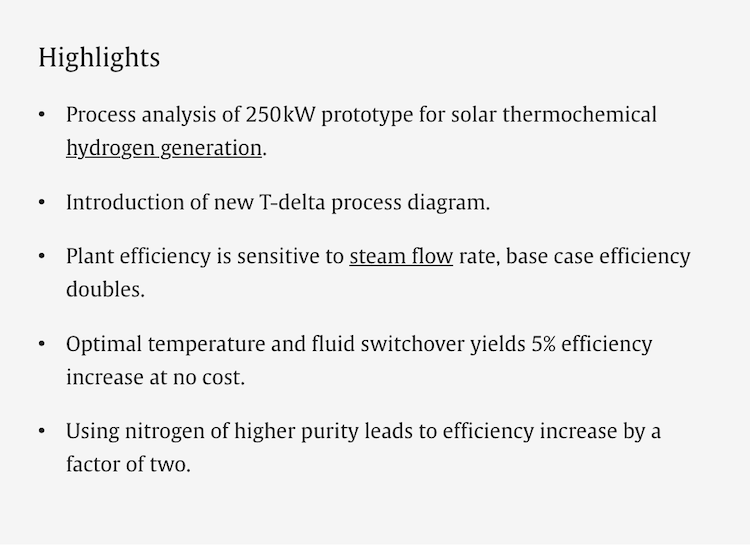
Published at International Journal of Hydrogen Energy – Process behavior analysis of a fixed-bed solar reactor for hydrogen generation via two-step thermochemical redox cycling
Abstract: The two-step solar-thermochemical cycle process for water splitting is a promising technology for hydrogen generation with very high theoretical efficiencies. This study investigates the operational behavior of a prototype solar reactor with thermal power of 250 kW. A multi-physical reactor model is used for analyzing the dynamical process behavior of the reactor’s porous metal …