Published at Solar Energy Materials – Thermal and environmental durability of novel particles for Concentrated solar thermal technologies
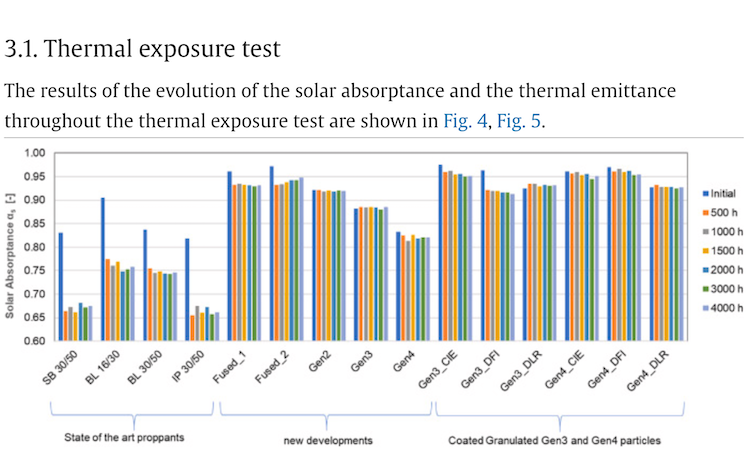
Abstract: Bauxite-based proppants, commonly used in the fracking industry, are also employed in solid particle receiver types of Concentrated Solar Thermal (CST) technologies. However, fracking has been banned in many countries due to its environmental impact, leading to a decline in demand for proppants. As a result, the current proppant price of 1 €/kg is …

Solar research into falling particle receivers results in first spin-off – FPR Energy

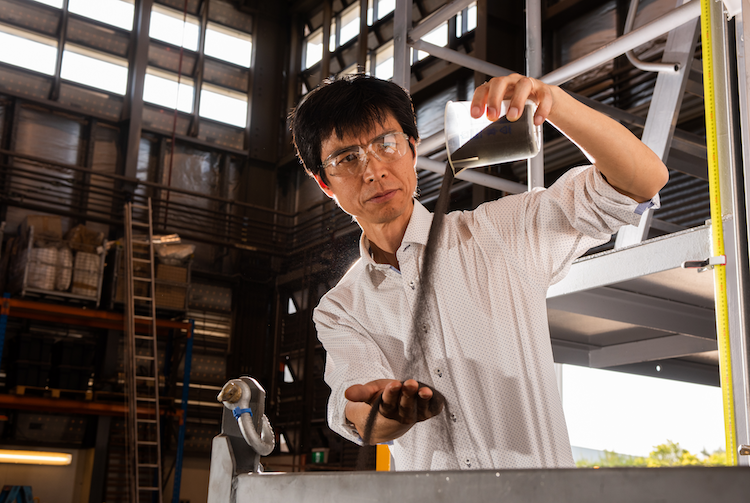
Falling Particle Receiver research has been global. Dr Jin-Soo Kim in Australia’s Falling Particles Process Bay, Newcastle Energy Centre IMAGE©CSIRO Government-funded research into decarbonizing heavy industry using concentrated solar thermal (CST) yields results with the world’s first spin-off based on a new kind of high temperature solar receiver – the falling particle receiver. Because of …

GlassPoint launches demo phase of 1.5bn solar steam for aluminum processing in Saudi Arabia

US solar steam projects developer GlassPoint on Tuesday announced it is advancing plans to build the world’s largest industrial solar thermal project in Saudi Arabia, unveiling the next phase of development for the GlassPoint Ma’aden Technology Showcase (GMTS). GlassPoint is developing the GMTS project with the Ministry of Investment of Saudi Arabia (MISA). The company …

Novel solar gasifier produces green iron and syngas from biowaste

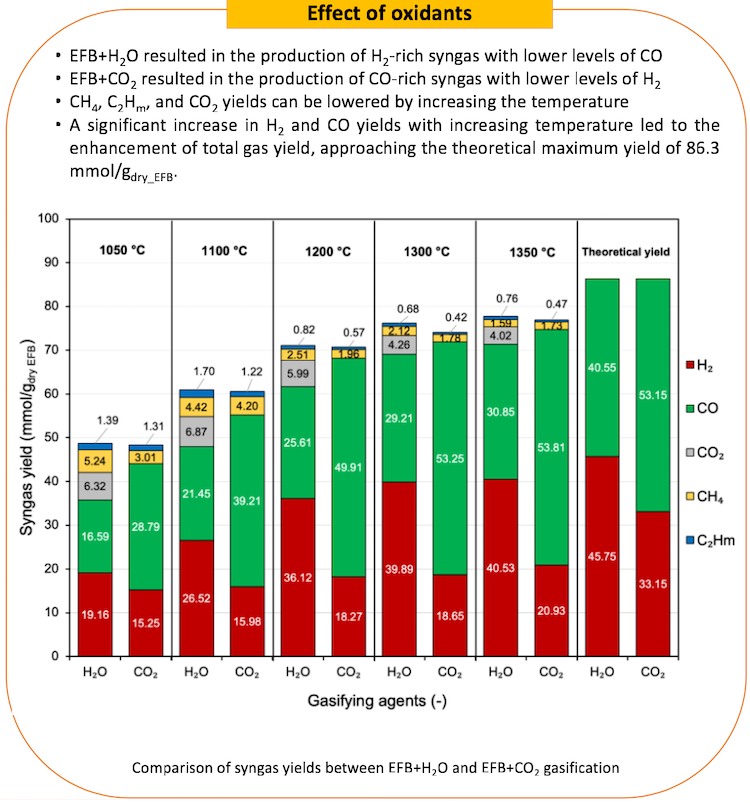
IMAGE©S.Abanades and S. Chuayboon Green iron and syngas production via continuous solar-driven agricultural waste biomass gasification combined with iron(III) oxide reduction Two international concentrated solar researchers have demonstrated using concentrated solar heat to produce green iron and syngas from renewable biomass, using no-oxygen conversion in a gasifier for a carbon-free process. In their paper, Green …

A novel solar tech for commercial heat deploys graphene nanoparticles in clear glass tubing

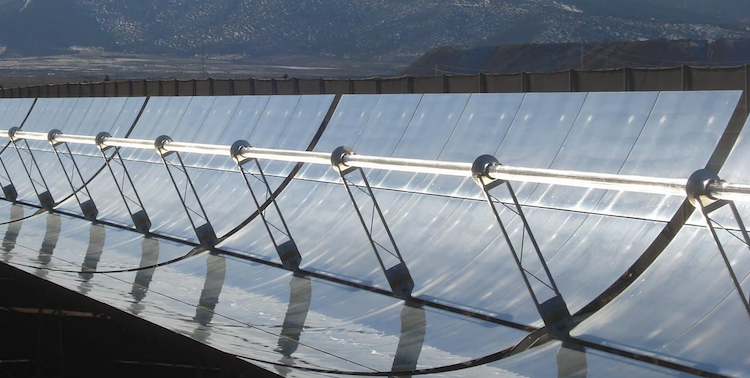
The tubing that absorbs the solar heat reflected off the parabolic trough-shaped solar collector in Trough CSP is normally a metal. Researchers at PROMES-CNRS have instead trialed glass tubing filled with graphene-infused nanoparticles suspended in water, to improve performance. In concentrated solar thermal (CST) energy collection using parabolic trough-shaped mirrors, the heat from the sun …

Published at Applied Thermal Engineering – Analysis of thermal and mechanical properties with inventory level of the molten salt storage tank in central receiver concentrating solar power plants

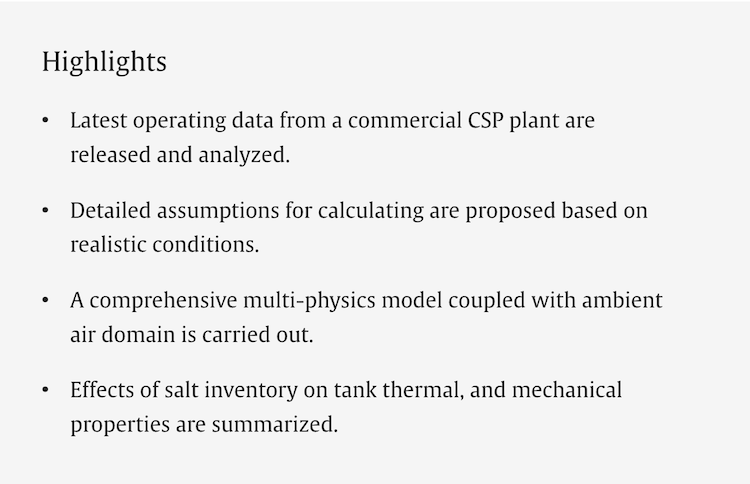
Abstract: Molten salt thermal energy storage (TES) tanks ensure steady power output of concentrating solar power (CSP) plants; however, recent tank failures have highlighted the need for further analysis. Current studies primarily focus on analyzing the molten salt flow, heat transfer, and thermal efficiency. Additionally, research on the latest tank structures is limited and lacks …

3D-Printed solar receiver of honeycomb mesh to spread heat evenly

Result of a 3D-Printed solar receiver of honeycomb mesh shows the heat distribution through the tubes carrying the air that acts as heat transfer fluid IMAGE©OmarBehar, KAUST A 3D-Printed solar receiver could solve some problems holding back a new technology: High-temperature solar receivers – for solar thermochemistry and industrial heat – can be prone to …

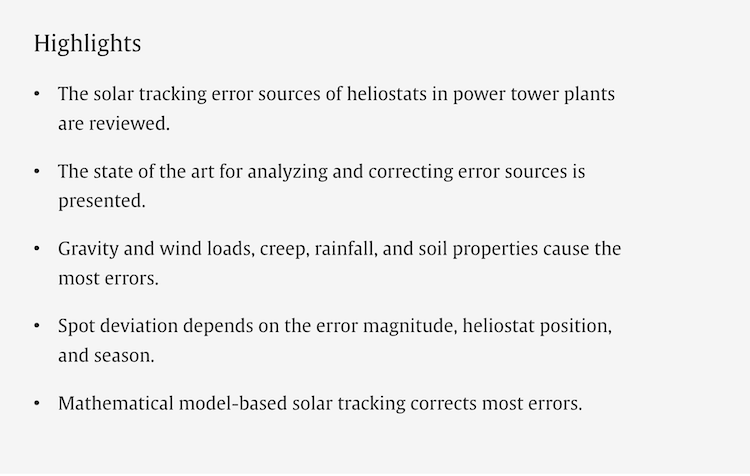
Published at Renewable and Sustainable Energy Reviews – Sources of solar tracking errors and correction strategies for heliostats

Abstract Heliostat fields represent the primary energy input for concentrating solar-thermal power based on power tower technology. They typically account for 40 %–50 % of the implementation cost of a power tower plant. Therefore, it is essential to optimize the solar tracking accuracy of heliostats to reduce solar tracking errors that lead to deviations in …

Published at Journal of Solar Energy Engineering – Heliostat Consortium: Gap Analysis on State of the Art in Wind Load Design

Abstract: Wind loads are a major driver of heliostat cost. Standardized methods and tools are needed for a more detailed understanding of the static and dynamic loads of a heliostat design. This will enable cost reduction of wind-dependent heliostats to avoid unnecessarily conservative heliostat designs and increase field efficiency and reliability to reduce the risk …

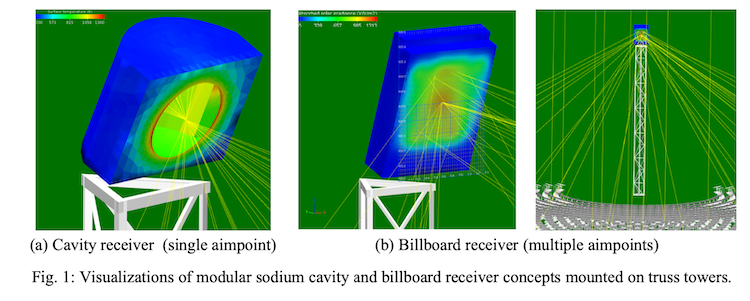
Lowest cost of heat for modular sodium CSP? A “Billboard” solar receiver with a “Cartesian” heliostat layout

High-temperature liquid sodium receivers able to run at over 700°C may allow use of modular multi-tower system configurations similar to that being developed by the Australian firm Vast Solar (now Vast) for next-generation sodium-based concentrating solar power (CSP). Unlike today’s one tall central tower encircled by one large heliostat field, a liquid sodium-based CSP system …